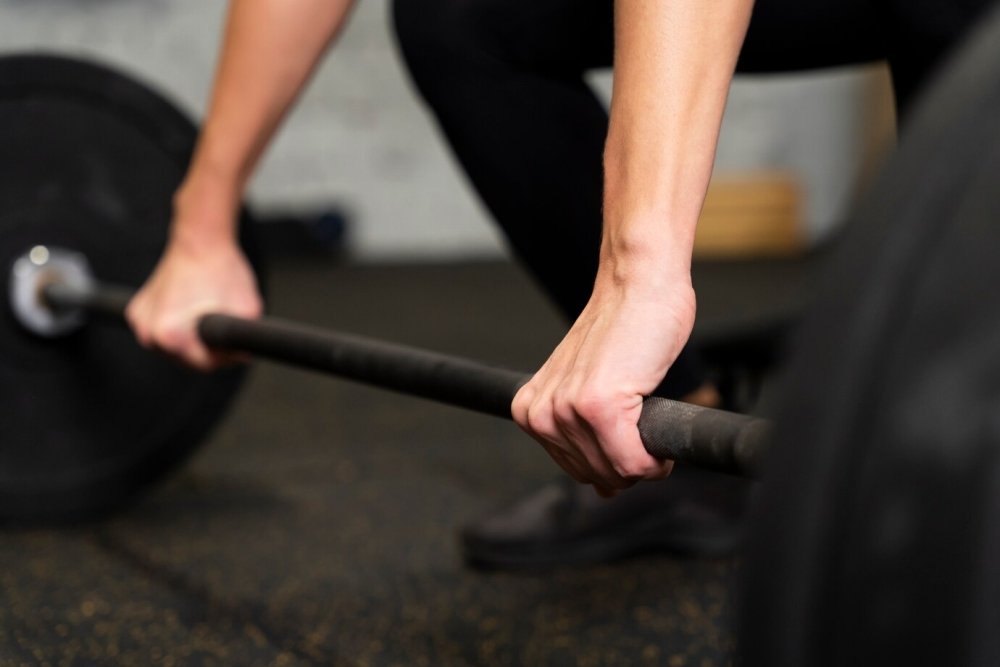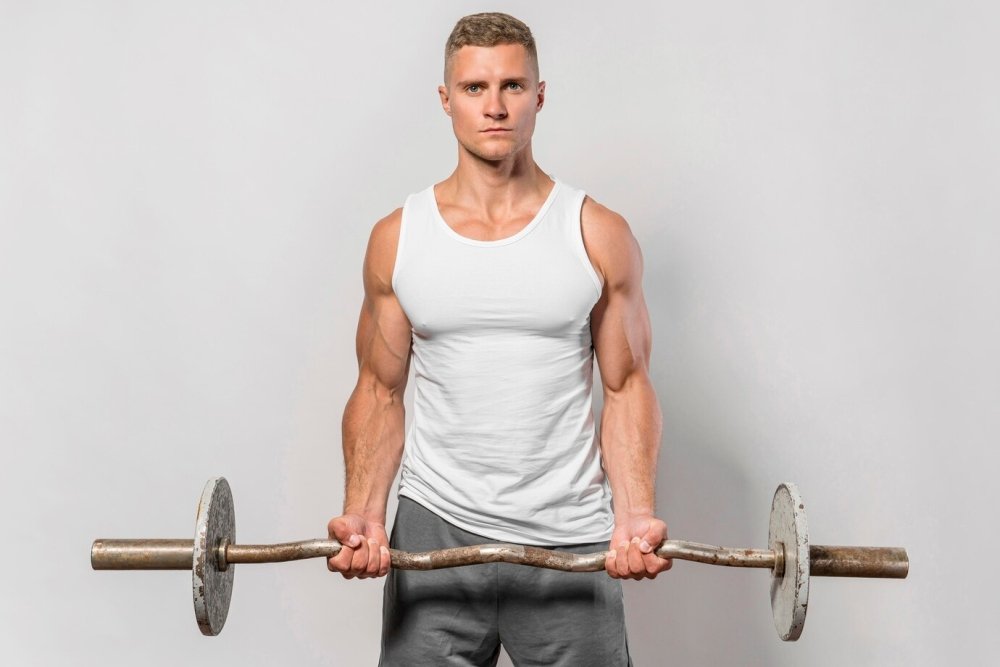

Won’t it be frustrating when you're crushing a heavy deadlift or pushing through a set of pull-ups, only for your grip to give out before your muscles do?
Losing your grip is a roadblock to progress.
A weak grip holds you back from lifting heavier, performing longer, and reaching your potential.
Fortunately, there are tools to help you dominate the bar and overcome this problem.
With products like the Tornado, Dynamo, and Gripzilla Hand Grippers, you can transform your grip into an unshakable force.
Why Does Grip Fail During Lifting?
Your forearm muscles are small compared to the legs, glutes, and back that power your heavy lifts.
On a deadlift, your posterior chain can handle far more load than your hands can hold onto. So grip becomes the weakest link.
There is also a sweat problem. Dry hands grip knurled steel just fine. Add heat and exertion and friction drops fast.
The bar does not slip because you are weak. Sometimes it slips because your palms are wet and friction is gone.
Beyond that, here are the most common reasons grip gives out mid-lift:
Forearm fatigue. Your grip muscles tire faster than larger muscle groups. Without targeted training, they cap out early.
No grip-specific training. Most lifters have a chest day, a leg day, and a back day. Almost nobody has a grip training plan. The muscles never get the direct stimulus they need to grow.
Wrong bar position. If the bar sits in your fingertips instead of the base of your palm, it will roll no matter how strong your hands are. The bar should sit at the crease where your fingers meet your palm. Not deep in the palm and not at the fingertips.
Over-relying on straps too soon. Straps are useful for certain movements. But if you reach for them every set, your raw grip never gets challenged and never improves.
The Fastest Fix (Chalk Before Anything Else)
Before you buy a single piece of equipment or change your training program, try chalk.
Magnesium carbonate absorbs moisture from your palms and dramatically increases friction between your skin and the bar. Most lifters see an immediate difference on their very next session.
If your gym allows loose chalk, use it. If not, clear grip gel is the answer.
It goes on like hand sanitizer, the alcohol evaporates, and you are left with a dry chalk layer that grips like normal chalk without the mess. Apply it 30 to 60 seconds before your set and let it fully dry.
Best Exercises to Improve Grip Strength for Lifting
Fixing grip long-term means training it directly. These are the exercises that transfer most to lifting performance.
Dead Hangs
Hang from a pull-up bar with straight arms and hold for as long as possible.
This builds support grip, which is the exact demand of deadlifts, rows, and carries. Start with 3 sets of 20 to 30 seconds. Add time or a light weight belt as you get stronger.
Farmer Carries
Pick up heavy dumbbells or kettlebells in each hand and walk. Simple and brutal. Your grip, forearms, and core all get hit at once. 3 sets of 30 to 40 meters is a solid starting point.
This is one of the best exercises for building grip endurance for weightlifting because it trains your hands under sustained load.
Plate Pinches
Pinch two weight plates smooth-side out between your thumb and fingers and hold them at your side.
This trains pinch grip, which transfers directly to any lift where the bar wants to roll away from you. Hold for 20 to 30 seconds per set.
Barbell Holds
Pull your working weight to deadlift lockout and hold it there for 10 to 20 seconds before lowering.
Nothing is more specific to deadlift grip than holding a deadlift. Program 2 to 3 holds at the end of your deadlift session.
Wrist Curls and Reverse Wrist Curls
Underrated and often skipped. Wrist curls directly target the forearm flexors that close your fingers around the bar.
Reverse curls hit the extensors on the back of the forearm. Both together build balanced forearm strength that supports grip under heavy load.
If your forearms are not growing despite regular training, this combination is often what is missing.
To understand more about why grip strength matters beyond the gym, including its link to injury prevention and long-term health, that post is worth a read.
How to Fix the Issue of Losing Your Grip During Lifting?
Let’s talk about how you can address your grip weakness with Gripzilla tools:
1. Gripzilla Tornado

The Tornado is no ordinary grip tool. Its friction-based resistance system mimics the challenges you face when lifting weights, like maintaining control over a heavy barbell.
Here’s how it delivers:
· Target Weak Links: The Tornado trains your stabilizing muscles that give out during deadlifts and rows.
· Rotational Strength: Use it to develop wrist stability and rotational power, crucial for controlling weights in exercises like cleans and snatches.
· Custom Resistance: Adjust the friction to simulate the exact intensity you need. Whether you’re struggling with 225 lbs or pushing past 500 lbs, the Tornado grows with you.
How to Use It for Lifting Success?
· Warm up with low resistance: Perform slow, controlled rotations to activate your grip muscles.
· Challenge yourself: Increase resistance to simulate the grip stress of a deadlift or kettlebell swing.
· Build endurance: Time yourself holding the Tornado under high tension. This directly translates to longer holds on the bar.
2. Gripzilla Dynamo
 The Dynamo wrist roller is here to annihilate your forearm fatigue and boost your grip strength during lifts.
Unlike traditional rollers that rely on dangling weights, the Dynamo is compact, mess-free, and packs an adjustable tension system.
Why It’s Perfect for Lifting:
· Grip Endurance: Holding the bar during deadlifts and farmer’s carries becomes second nature.
· Diverse Movements: Perform underhand rolls for deadlift-specific endurance or overhand twists to mimic pull-up grips.
How to Use It Effectively?
After your main lift, do a burnout set with the Dynamo and crank the tension high and roll for as long as possible.
· Pre-lift activation: Use lighter tension to wake up your forearms and wrists, ensuring maximum stability during your sets.
· Progressive overload: Gradually increase tension over time to match your lifting progress.
3. Gripzilla Hand Grippers
 For targeted grip strength, Gripzilla Hand Grippers are the best in town.
Available in resistances ranging from beginner-friendly to beastly, they’re perfect for progressive overload.
What Makes Them Essential for Lifters:
· Pinpoint Grip Weaknesses: Whether your issue is failing during rows or losing the bar on a deadlift lockout, hand grippers allow you to train each hand independently.
· Progressive Overload: With grippers ranging from 50 lbs to 300 lbs, you’ll never outgrow the challenge.
· Endurance Boost: High-rep training improves your grip stamina, critical for extended sets like farmer’s carries.
Sample Routine for Lifters:
1. Warm-Up: Start with 50 lbs grippers for 2 sets of 15 reps.
2. Strength Training: Use heavier grippers for 3 sets of 8-12 reps, holding the closed position for 3-5 seconds.
3. Endurance Training: Perform high-rep sets (20+ reps) with lighter grippers to simulate long-duration grips, such as holding a barbell at the top of a deadlift.
Common Mistakes That Keep Grip Weak
Here are some mistakes to avoid:
1. Gripping too wide
A wider grip reduces your mechanical advantage. Keep your grip at shoulder width or slightly inside.
2. Not squeezing actively
Grip is not passive. Squeeze the bar hard and keep squeezing throughout the entire rep. Think about leaving fingerprints in the metal.
3. Skipping grip work when you are tired
Grip muscles need direct training volume, not just the incidental work they get from heavy lifting. Tired from leg day is not a reason to skip grip finishers.
4. Never training the three grip types
Crush, pinch, and support are all different. If you only train crush grip with grippers and never do dead hangs or plate pinches, you have gaps that will show up under load.
FAQs on Why Your Grip Keeps Slipping During Lifts
Why do my forearms tire before my back does on deadlifts?
Your forearm flexors are much smaller than your back and leg muscles. The deadlift loads your entire posterior chain, but grip reaches its limit first. Direct grip training and chalk are the two fastest fixes.
How long does it take to improve grip strength for lifting?
Most lifters notice meaningful improvement within 4 to 6 weeks of consistent grip training. Grip responds faster than most muscle groups when given direct training stimulus.
Is the hook grip better than mixed grip?
For most lifters doing heavy pulling, yes. The hook grip is more secure, more symmetrical, and carries less injury risk than mixed grip. The adjustment period of 2 to 4 weeks while your thumb adapts is worth it.
How do I stop losing grip during high-rep sets?
This is a grip endurance problem, not a strength problem. Add dead hangs, farmer carries, and high-rep hand gripper sets to your training. These train the support grip and grip stamina that fail on long sets.
Conclusion
Losing your grip during lifting doesn’t have to be your reality.
By incorporating the Tornado, Dynamo, and Gripzilla Hand Grippers, you can tackle grip fatigue, build forearm strength, and improve your lifting performance.
It’s time to stop letting your grip hold you back. Try these tools, build an unshakable hold, and dominate the bar like never before.
Are you ready to take control?