
You've been showing up to the gym, putting in the reps, and following your program, but have you ever stopped mid-set and thought, "Wait, does the way I'm holding this bar actually matter?"
Short answer: Yes. More than most people think.
The difference between a pronated grip and a supinated grip isn't just gym jargon.
It changes which muscles fire, how much weight you can move, whether you're building the body you want, and, if you're getting it wrong, whether you're quietly setting yourself up for injury.
In this guide, we're going to break it all down:
What Is a Pronated Grip? (And Why Everyone Calls It "Overhand")

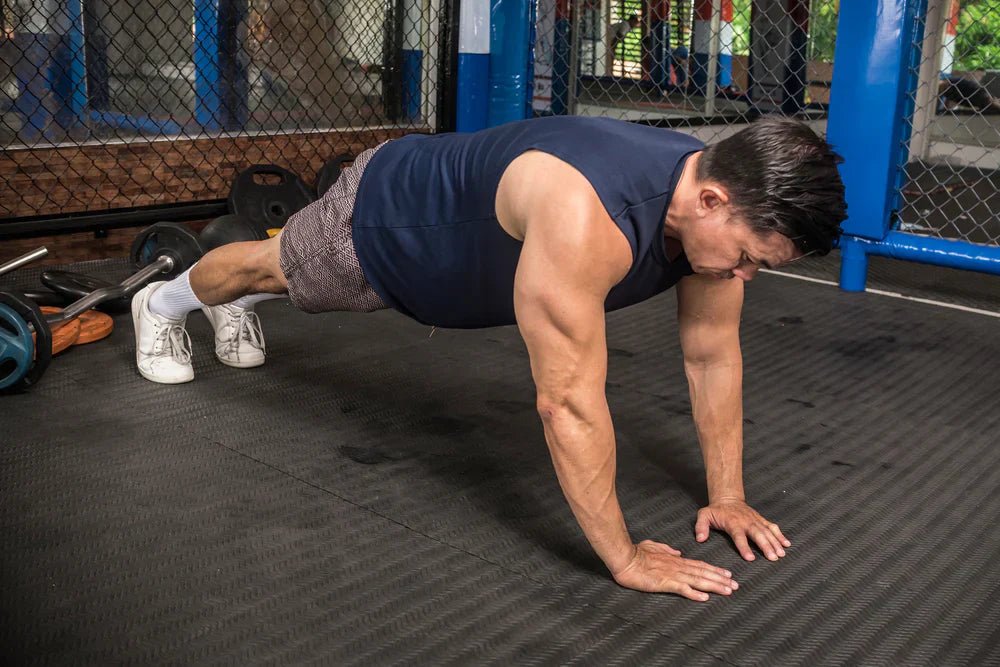
A pronated grip, also called an overhand grip, is when your palms face downward or away from you as you hold the bar.
Think of it like throwing a punch, or pressing the back of your hands toward the floor.
If you've ever done a standard pull-up, a conventional deadlift, or a barbell row, you've used a pronated grip without even thinking about it. It's the default for most compound, heavy-load exercises.
Quick anatomy note: Pronation is the rotational movement of the forearm that turns your palm downward. It's controlled primarily by the pronator teres and pronator quadratus muscles in your forearm.
Exercises That Use a Pronated Grip
• Pull-ups (overhand)
• Conventional deadlift
• Barbell row (overhand)
• Overhead press
• Bench press (standard)
• Reverse curls
• Upright rows
• Lat pulldown (wide grip)
What Is a Supinated Grip? (The "Underhand" One You Know From Bicep Curls)

A supinated grip, also called an underhand grip, is when your palms face upward or toward you as you grip the bar.
Think of the position your hands are in when you're holding a bowl of soup, or doing a classic bicep curl.
This grip is most commonly associated with isolation exercises targeting the biceps, but it also shows up in chin-ups and underhand barbell rows, both of which are more bicep-dominant than their pronated counterparts.
Anatomy note: Supination is the opposite of pronation, it's the rotation that turns your palm upward. The biceps brachii is actually a major supinator of the forearm, which is one reason the supinated grip tends to 'feel' like a stronger bicep position.
Exercises That Use a Supinated Grip
• Chin-ups
• Bicep curls (standard barbell or dumbbell)
• Underhand barbell row
• Underhand lat pulldown
• Reverse grip bench press
• Cable curls (underhand)
Pronated vs. Supinated Grip
|
Feature |
Pronated Grip (Overhand) |
Supinated Grip (Underhand) |
|
Palm Direction |
Facing down / away from body |
Facing up / toward body |
|
Also Called |
Overhand grip |
Underhand grip |
|
Primary Muscles Targeted |
Lats, rhomboids, traps, rear delts |
Biceps brachii, brachialis, forearms |
|
Best For |
Back-dominant pulling, heavy compound lifts |
Bicep isolation, arm-dominant pulling |
|
Grip Strength |
Generally stronger for heavy loads |
Can feel weaker under very heavy loads |
|
Injury Risk |
Shoulder/elbow if technique breaks down |
Wrist strain, bicep strain if overused |
|
Common Exercises |
Pull-ups, deadlifts, rows, bench press |
Chin-ups, curls, underhand rows |
|
Forearm Position |
Pronated (rotated inward) |
Supinated (rotated outward) |
What the Research Actually Says About Muscle Activation
This is where gym myths get busted.
On back training: A study by Lusk et al. (2010) in the Journal of Strength and Conditioning Research compared four grip variations on the lat pulldown.
The pronated grip produced significantly greater latissimus dorsi activation regardless of grip width. If building a wider back is your goal, overhand is your best friend.
On bicep training: Research published in Sports (2023) tested supinated, pronated, and neutral grip curls on competitive bodybuilders. Biceps brachii activation ranked: supinated > neutral > pronated.
So yes, underhand curls are the bicep builder. But here is the flip side: pronated (reverse) curls are superior for brachialis and brachioradialis development, which adds serious thickness to your arms that most lifters neglect.
On bench press: Lehman (2005) found that a supinated (reverse) grip bench press increased activation of the upper chest (clavicular pec head) and biceps. An unconventional move, but it works.
On pull-ups vs chin-ups: Youdas et al. (2010) found pull-ups (pronated) produced greater lower trap activation than chin-ups (supinated). Dickie et al. (2017) confirmed that lat, mid-trap, and infraspinatus activity is similar across variations, but the pronated pull-up gave a slight middle trapezius edge.
Injury Risk, What You Need to Know
Grip type absolutely influences injury risk, and this is where a lot of recreational lifters get blindsided.
Pronated Grip Injury Risks
Shoulder impingement and rotator cuff irritation are the primary concerns with the pronated grip, especially in pulling exercises. The position can increase the distance of the humerus from the shoulder joint in certain movements.
Elbow tendinopathy can also develop if the elbows are chronically extended under load with poor form.
However, the pronated grip actually reduces risk in several important ways, it lowers the chance of bicep tears (common in heavy supinated or mixed grip deadlifts), and reduces wrist torsion stress in compound lifts.
Supinated Grip Injury Risks
The supinated grip increases forearm internal rotation and places more mechanical demand on the biceps brachii. This is great for curl isolation but becomes a problem in heavy pulling scenarios.
Wrist and elbow strain are the most common complaints associated with supinated grip work, particularly chin-ups and heavy bicep curls. The biceps brachii is also at higher risk of proximal tendon stress during loaded supinated pulls.
Which Grip Should You Use? A Simple Decision Framework
There's no universally "better" grip. The right one depends on what you're trying to achieve. Here's how to think about it:
|
Your Goal |
Best Grip Choice |
Why |
|
Build a wider, thicker back |
Pronated (overhand) |
Greater lat activation per research (Lusk et al., 2010) |
|
Maximize bicep peak (biceps brachii) |
Supinated (underhand) |
Better mechanical leverage for the bicep belly |
|
Build forearm and arm thickness |
Pronated (reverse curl) |
Targets brachialis and brachioradialis |
|
Heavy deadlifts (grip failing) |
Mixed grip (alternate each set) |
Prevents bar roll; manage bicep tear risk |
|
Joint-friendly pulling |
Neutral grip |
Reduces wrist and elbow stress |
|
Upper chest development (bench) |
Supinated (reverse bench) |
Greater clavicular pec activation |
|
Trap and rear delt emphasis (rows) |
Pronated, wide grip |
Greater posterior deltoid and trap engagement |
|
Injury prevention / rehab phase |
Neutral grip as baseline |
Lowest joint stress overall |
Common Questions About Pronated and Supinated Grips
Is overhand grip the same as pronated?
Yes. Overhand grip and pronated grip mean the same thing, your palms face downward or away from your body.
Is underhand grip the same as supinated?
Yes. Underhand grip is just the everyday term for a supinated grip, where your palms face up or toward you.
Which grip is better for building a wide back?
Pronated. EMG research consistently shows greater latissimus dorsi activation with an overhand grip on vertical pulling exercises.
Which grip is better for biceps?
For the biceps brachii specifically, supinated wins on isolation. For overall arm development , including the brachialis and brachioradialis, rotate between all three grip types.
Can the wrong grip cause injury?
Yes. Overusing a supinated grip in heavy pulling can stress the bicep tendon and wrist. Overusing a pronated grip with poor shoulder mechanics can cause rotator cuff irritation. Balance and proper form matter more than grip type alone.
What grip should beginners start with?
Start with whatever feels natural and stable. For most exercises, this is a pronated grip. As you develop confidence, introduce supinated and neutral variations to build complete strength.
The Real Answer (Use Both)
The pronated vs supinated debate has a simple answer: stop picking sides.
Pronated grips are your workhorse for heavy compound work and back-dominant training. Supinated grips are your tool for bicep isolation. Neutral grips protect your joints and build balanced arm strength. Mixed grip is your heavy deadlift solution, used sparingly.
The lifters who build the most complete physiques are not loyal to one grip. They pick the right grip for the right goal, movement by movement.
Take five minutes today and audit your training. Are you using the same grip on every single exercise?
Add one variation this week and feel the difference for yourself.