
Most wrist rollers end up in the same place. They get bought with good intentions, used four or five times, and then they sit in a corner of the garage with a tangled rope and a weight plate you keep tripping over.
We built the Dynamo to fix that. But we're not going to tell you it's perfect, because it isn't, and you'd see through it anyway.
So here's the straight answer.
Yes, the Dynamo is worth it if you want a wrist and forearm trainer you'll actually pick up three times a week. It needs no plates, no rope, no rack and no set-up. You twist the knobs, you train, you put it away.
No, it isn't worth it if you already use a plate-loaded roller and like it, you want to add heavy weight in small measurable steps, or you mainly want a stronger squeeze.
This Gripzilla Dynamo review comes from the people who make it, so you should know where we're coming from.
That's why the second half of this review is about what it doesn't do, how it compares with a homemade roller that costs a fraction of the price, and who should buy something else. We'd rather you buy the right tool.
What the Gripzilla Dynamo Is?
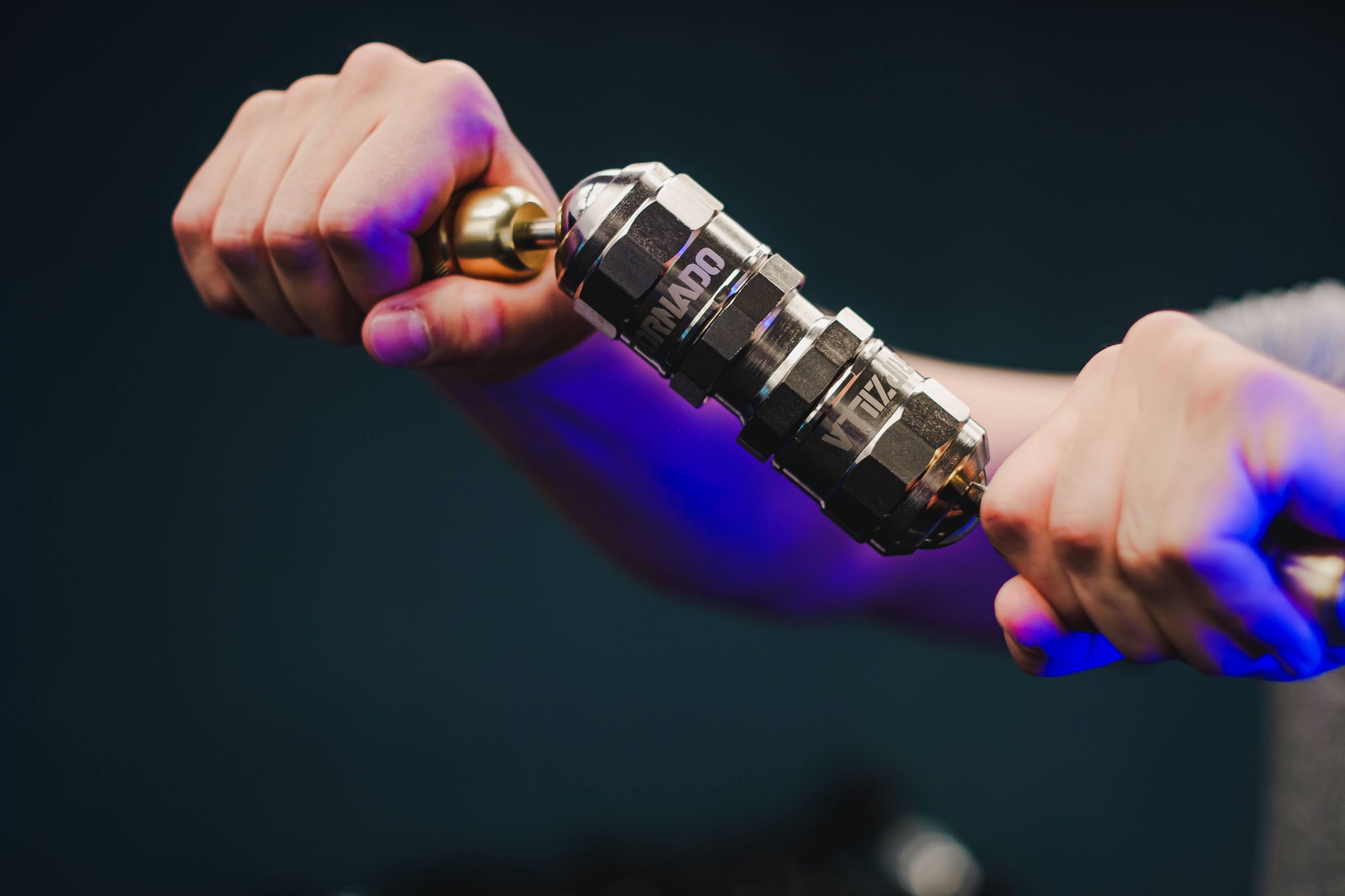
 The Dynamo is a hand-held forearm and wrist trainer made of metal, with two handles that rotate and a friction mechanism between them.
You twist and roll the handles against resistance that you set yourself. There are no plates, no rope and nothing to hang.
|
Our verdict |
Worth it for people who will use it |
|
Price |
$119 at the time of writing (regular price $170) |
|
Weight |
800 g, about 1.8 lb |
|
Resistance |
Friction, with a separate tension knob for each handle |
|
Set-up |
None |
|
Trains |
Wrist flexion and extension, forearm rotation, grip endurance |
|
Doesn't train |
Finger-closing (crush) strength |
|
Biggest downsides |
There's a resistance ceiling, and the knobs aren't calibrated in pounds |
Buy the Gripzilla Dynamo.
How the Dynamo Works

Most wrist rollers use gravity. You wind a rope around a bar and lift a weight. The Dynamo replaces the weight with friction.
- Set the tension. Each handle has its own knob. Tighten it for more resistance, loosen it for less.
- Hold it. Grip one handle in each hand. You can also use it with one hand at a time.
- Move. Roll your wrists forward and back, twist the handles against each other, or hold a position and push. The friction resists you through the whole movement.
- Change position. Hold it out in front of you, by your side, vertically, at a 45° angle or behind your back, and the same tool loads different angles.
Two things follow from friction.
1. First, the resistance is there in both directions, so you work both the flexors and the extensors on every rep.
2. Second, the resistance doesn't depend on gravity or on a weight being at the end of a rope, so it feels the same wherever you hold it.
One honest note on the controls. The knobs let you go lighter or harder, but friction isn't measured in pounds.
We can tell you the knob is tighter or looser, not that it is exactly 40 lb. If tracking an exact number matters to you, see the downsides below.
Dynamo vs a Wrist Roller (Cheap/Regular)
 This is the question we get asked most. Some people say they can make a wrist roller out of a broom handle, a rope and a plate for a few dollars.
They can, and for plenty of people that is the right call. Here is a fair comparison.
|
|
DIY or plate-loaded roller |
Gripzilla Dynamo |
|
Cost |
Lowest, especially if you already own plates |
$119 at the time of writing |
|
Setup |
Rope, dowel and a weight every time |
None |
|
Space |
Needs room to lower the weight, and a rack for some versions |
Fits in a bag |
|
Loading |
Heavy, easy to measure in plates |
Adjustable, but set by feel |
|
Shoulders |
Holding a weighted bar out in front tires the shoulders |
Used close to the body if you like |
|
Left and right |
One bar, both hands work together |
Each hand has its own tension |
|
Direction |
Roll up, then lower |
Resistance both ways, with no weight to drop |
|
Travel |
Not realistic |
Easy |
|
Noise and mess |
Plates and rope on the floor |
Quiet |
|
Progression |
Add more plate, which is simple to track |
Turn the knob up, which is harder to track |
What It's Good At, and What It Isn't
|
Good at |
Not good at |
|
Wrist flexion and extension in one tool |
Crush grip (closing your fingers). Use a gripper for that |
|
Forearm endurance and the burn that comes with it |
Building the biggest forearms possible. Heavy barbell or dumbbell work does that better |
|
Training each hand at its own level |
Showing you an exact number for the resistance |
|
Training anywhere, quietly |
Very heavy loading, because friction has a ceiling |
|
Smooth, steady resistance |
Replacing a full forearm routine |
|
Light, controlled work on days your wrists feel stiff |
Pinch grip on its own (you need a separate tool or plates) |
Does Wrist Roller Actually Work?
Here's what we can and can't say.
What's reasonable to say
Forearm muscles respond to progressive loading like any other muscle. A wrist roller loads the wrist flexors and extensors directly, which deadlifts, rows and pull-ups only do indirectly.
So it can fill a gap in your training, particularly for grip endurance and wrist strength.
What we can't say
We haven't run a clinical trial on the Dynamo, and we won't tell you it adds a set number of pounds to your grip. If a seller promises that, ask for the evidence.
What decides whether it works for you.
- Resistance that's hard enough. The last few reps of a set should be difficult.
- Slow, controlled movement. Rushed reps hand the work to momentum.
- Regular use. Two to four times a week beats one long session.
- Gradual progress. Turn the knobs up as it gets easier.
The honest limitation. On its own, a wrist roller isn't the most efficient way to build large forearms. If size is your goal, combine it with heavy wrist curls and loaded carries. If endurance and wrist strength are the goal, it's a good fit.
For the bigger picture on why grip matters, read our guide to the benefits of grip strength.
Alternatives Compared

|
Option |
Cost |
Good for |
Weak at |
|
$119 |
Portable, no-weights wrist work |
Ceiling, set by feel, no crush work |
|
|
$197 at the time of writing |
Multi-direction forearm work |
Costs more |
|
|
Medium |
Crush grip with measured steps |
Doesn't train the wrist |
|
|
Rope-and-weight DIY roller |
Lowest |
Heavy, trackable loading |
Set-up, space, shoulder fatigue |
|
Plate-loaded roller with rack attachment |
Medium |
Home gyms |
Needs plates and a rack, not portable |
|
Dumbbell or barbell wrist curls |
Low if you own weights |
Building forearm size |
Only one direction at a time, needs a bench |
|
Other friction wrist rollers |
Medium to high |
Similar to the Dynamo |
Check the build and whether the knobs adjust each hand |
Is It Worth the Price?
The Gripzilla Dynamo price is $119 at the time of writing (regular price $170). Prices and offers change, so check the product page for today's figure.
Here's what that works out to if you train three times a week:
|
How long you use it |
How long you use it |
Cost per session at $119 |
Cost per session at $170 |
|
6 months |
78 |
about $1.53 |
about $2.18 |
|
1 year |
156 |
about $0.76 |
about $1.09 |
|
2 years |
312 |
about $0.38 |
about $0.54 |
The calculation is easy. The honest part is that it only works if you use it. A $119 tool used for two weeks is an expensive mistake, and a $15 tool used for two years is a bargain.
So the real question is whether you'd use it, and the answer depends on why previous attempts at forearm training stalled.
That's why the guarantee matters
You get 30 days to try it. If it isn't for you, read the refund policy for how returns work, because return details can include conditions. We'd rather you find out in the first month than keep something you don't use.
What you're comparing it with:
- A DIY roller costs less, but needs set-up and space.
- A plate-loaded roller with a rack attachment can cost as much as the Dynamo or more.
- A gripper set does a different job.
- A cheaper friction roller may be fine, so check the build, whether the knobs adjust each hand and how it's reviewed.
If you're looking for the best wrist roller to actually keep using, and you want a no-weights, adjustable wrist roller that goes in a bag, the Gripzilla Dynamo is our recommendation. If you're not sure, the guarantee exists for exactly that.
Elbow and Wrist Pain

A lot of people look for a wrist roller because something aches. We want to be careful here.
- The Dynamo is fitness equipment, not a medical device. We don't claim it treats, cures or prevents any condition.
- Some customers use it as part of looking after their wrists and forearms. That's their experience, not a promise.
- Tendon and joint problems vary a lot, and rehabilitation is usually graded and supervised. See a doctor or physiotherapist first, particularly after a fracture, surgery, numbness or tingling.
- If you've been cleared, start with the knobs loose, keep the reps slow, build up over weeks and stop if the pain increases.
- Don't push through sharp or growing pain.
Is Gripzilla Legit?
Good question when the company that makes the product is writing the review. Gripzilla designs and sells grip and forearm training tools, including grippers, the Dynamo and the Tornado.
You can read about us, check every customer review on our review page, and read the refund and shipping policies before you pay. If something goes wrong, contact us.
FAQ
Is the Gripzilla Dynamo worth it?
It is if you want a compact wrist roller with no weights and you'll use it regularly. It isn't if you already use a plate-loaded roller, want heavy measurable loading or mainly want a stronger squeeze.
How much does the Gripzilla Dynamo cost?
The Dynamo is $119 at the time of writing, with a regular price of $170. Prices and offers change, so check the product page for the current figure.
What is the Gripzilla Dynamo?
It's a metal, hand-held wrist and forearm trainer with two rotating handles. A tension knob on each handle sets the friction resistance, so there are no weights or ropes.
How does the Dynamo create resistance?
Through friction. Each handle has its own tension knob. Tightening it makes the rolling and twisting motion harder, and loosening it makes it easier.
Is the Dynamo better than a DIY wrist roller?
It depends on what you value. A DIY roller costs less and is better for heavy, trackable loading. The Dynamo is better for convenience, portability, separate resistance for each hand and use without plates, rope or a rack.
Does a wrist roller work?
A wrist roller loads the wrist flexors and extensors directly, so it can build wrist strength and forearm endurance if the resistance is hard enough, you move slowly and train regularly. It's less efficient for building large forearms than heavy wrist curls.
What muscles does the Dynamo work?
The wrist flexors and extensors, the forearm rotators (pronators and supinators) and the muscles you use to hold on.
Does the Dynamo improve grip strength?
It builds wrist strength and grip endurance, which support your grip. For a stronger squeeze, add a hand gripper, which trains finger closing directly.
How often should I use a wrist roller?
Two to four times a week suits most people, with at least a day between harder sessions. Start with two short sessions in week one.
Is the Dynamo good for beginners?
Yes. Start with the knobs loose, learn the movements slowly and add tension over a few weeks.
Can I use the Dynamo with tennis elbow or wrist pain?
The Dynamo is fitness equipment, not a medical device, and we don't claim it treats any condition. If you have pain, speak to a doctor or physiotherapist before using it, and stop if the pain increases.
How do I track progress when the knobs have no numbers?
Mark the starting position of each knob, count quarter-turns, and log the turns with your set time and tempo. When a setting feels easy for a full session, add a quarter-turn.
Can I use the Dynamo with one hand?
Yes. You can hold one handle still and work the other, which is useful for balancing a weaker side.
Dynamo or Tornado: which should I buy?
Choose the Dynamo for a simpler, more portable, lower-cost tool for wrist rolling and twisting. Choose the Tornado if you want movement in more directions and a bigger exercise library.
What is the Dynamo's return policy?
There's a 30-day money-back guarantee. Read the refund policy for how returns work.
The Final Verdict
The Gripzilla Dynamo isn't the cheapest wrist roller, the heaviest or the most precise. It won't replace a gripper or a full forearm routine, and a strong lifter could run out of resistance.
What it does well is simple. It removes every reason not to train your wrists and forearms. It's ready in a second, it fits in a bag, it's easy on the shoulders, it loads both directions and it lets each hand work at its own level.
If you'll happily use a rope-and-plate roller, keep it. If you've been meaning to train your forearms and wrists and keep not getting round to it, the Dynamo is built for you, and the guarantee means you can find out without a big risk.