
Most people train grip like it's one thing. Squeeze a gripper, call it a day, move on.
Then they wonder why their deadlift still slips at lockout, why their fingers give out halfway up a route, or why their forearms look the same after a year of work.
Grip isn't one muscle. It's a system, and it works in different ways depending on what your hand is doing.
Crushing a can is not the same as hanging off a bar. Pinching a plate is not the same as holding a heavy carry for time.
Train one, ignore the rest, and you build a hand with obvious holes in it.
Here are the real types of grip strength, what each one does, and how to train them.
What Grip Strength Actually Is
 Grip strength is the force your hands, fingers, wrists and forearms produce when you hold, squeeze or pinch something.
It runs off the muscles in your forearm that control your fingers, plus the smaller stabilisers in the hand.
That's why forearm size and grip go together. Bigger forearms usually mean a stronger grip, and a stronger grip almost always shows up as thicker forearms.
And because your hand does several different jobs, grip splits into distinct types. Hit them all and your hands perform everywhere.
Miss one and you get a weak link that shows up at the worst possible moment.
The 4 Types of Grip Strength
Most articles stop at three. Fine as far as it goes, but it leaves out the one type that keeps your hands healthy and your elbows pain-free. Here are all four.
1. Crush Grip
 The one everybody pictures. It's the force between your fingers and palm when you close your hand around something.
- What it is. Squeezing your hand shut against resistance, like crushing a can or closing a gripper.
- Where it shows up. Every heavy pull. Deadlifts, rows and shrugs all run off crush strength, and it's usually the first thing to fail when the bar gets heavy.
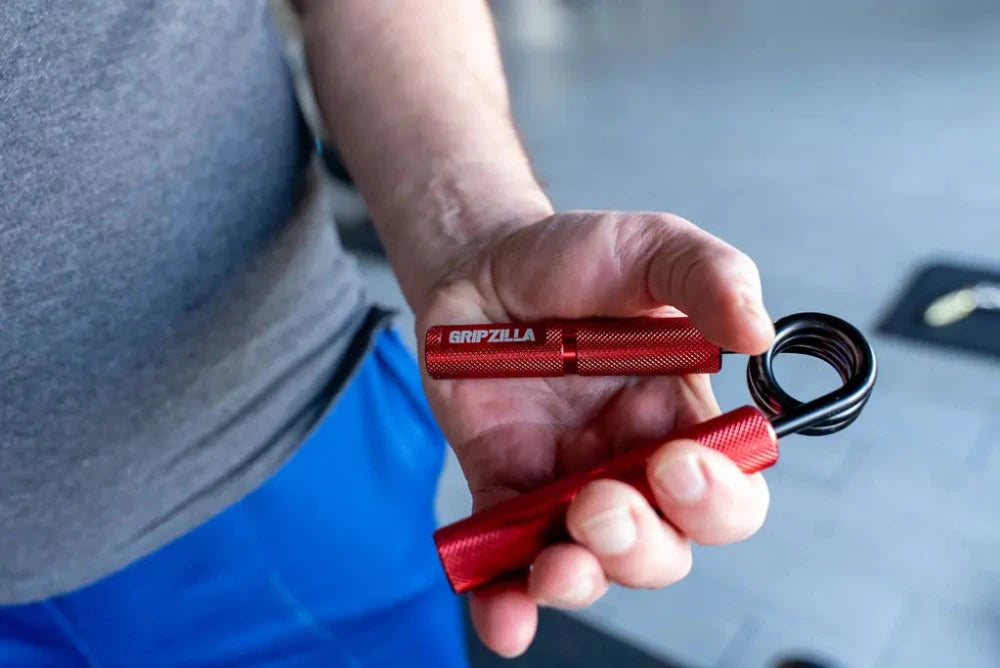
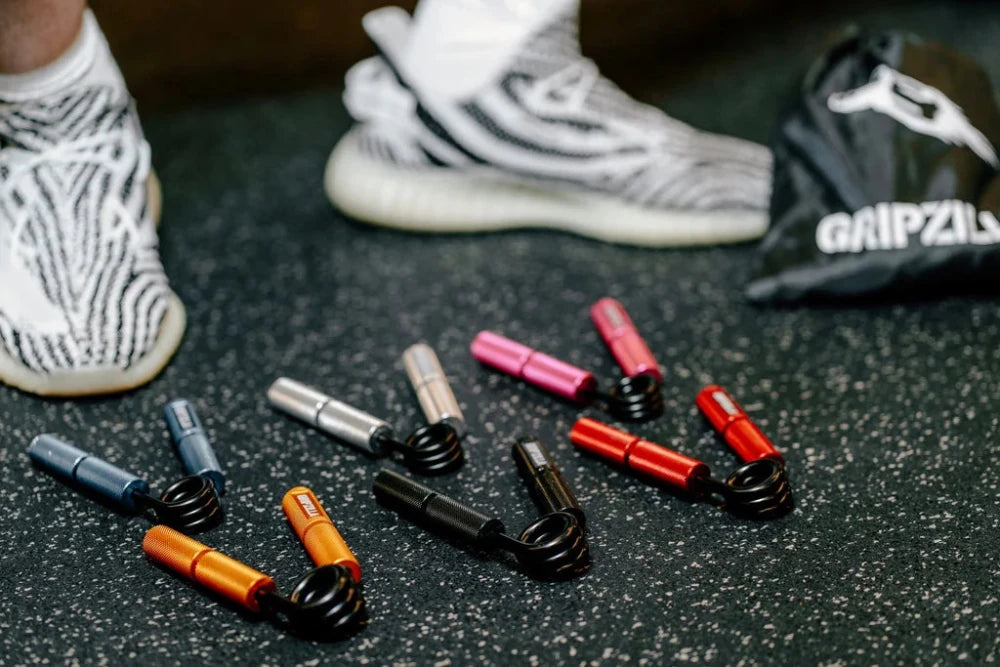
- How to train it. Hand grippers, straight up. A set of grippers builds it fast, and a progressive kit like the Ultimatum 6-piece set runs from 50lb to 300lb so you keep adding load as your hands catch up.
2. Pinch Grip

The most neglected type, and the reason so many lifters have weak thumbs. It's the strength between your thumb and fingers, no palm involved.
- What it is. Holding an object between fingertips and thumb, like pinching a plate flat or turning a key.
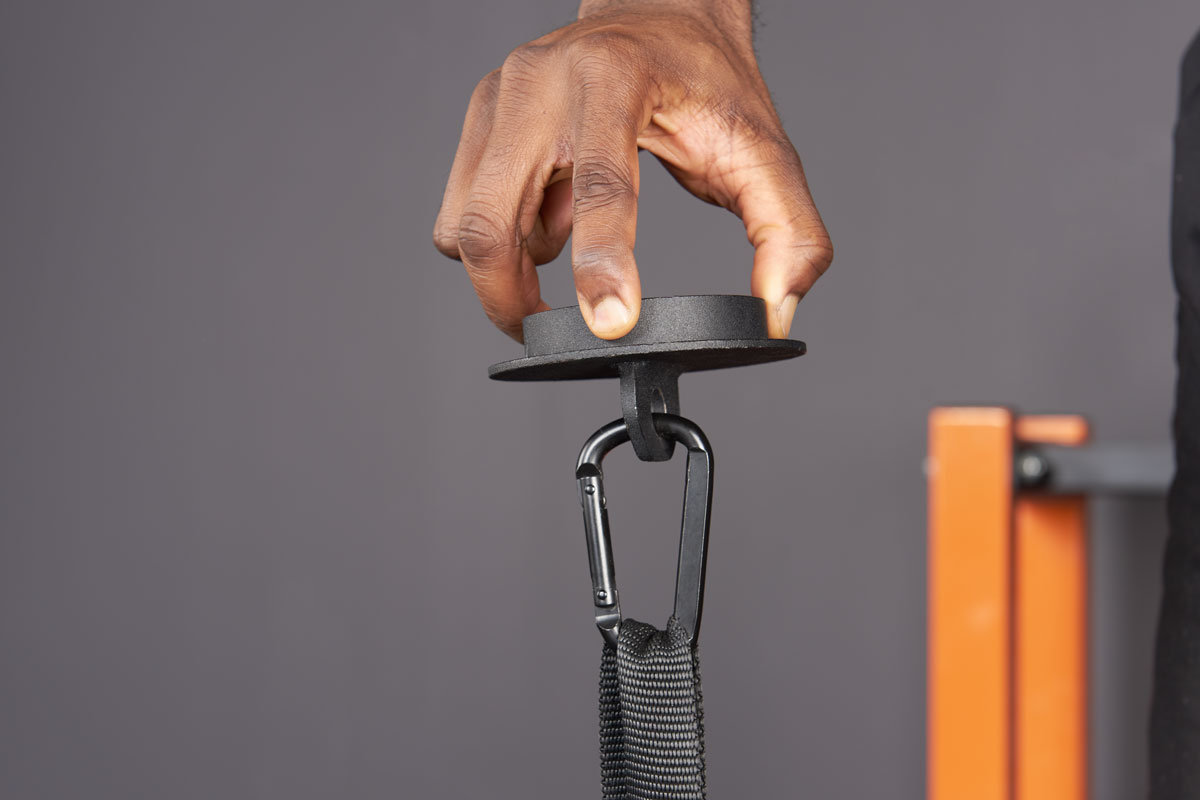
- Where it shows up. Climbing lives on it. Grapplers use it every time they control a wrist or a collar. A strong pinch also means a strong thumb, which stabilises almost everything else your hand does.
- How to train it. Plate pinches, held for time. Tools that force your fingers and thumb to control a moving load help too. Rotating the Titan Balls keeps your thumb and fingers working against 1.7kg of shifting steel.
3. Support Grip
Your ability to just hang on. Not crush, not pinch, hold on to something heavy for as long as possible.
- What it is. Endurance strength. How long your hands last under load.
- Where it shows up. Farmer's carries, dead hangs, holding a shrug at the top. It's what most sports actually demand, from a climber holding a position to a grappler refusing to let go.
- How to train it. Hold heavy things for time. Dead hangs, loaded carries, timed bar holds. A forearm tool like the Dynamo trains the endurance side hard, since its wringing motion keeps your forearms under tension through the full movement instead of one quick squeeze.
4. Extension Strength
The one almost nobody trains, and the reason so many lifters have cranky elbows. It's the opposite of crushing. Opening your hand and spreading your fingers against resistance.
- What it is. The muscles on top of your forearm that pull your fingers back out. Every other grip type flexes inward. This one works the other direction.
- Where it shows up. Balance and joint health. Train only the crushing muscles and you build an imbalance across the forearm that loads the elbow. The extensors keep it in check.
- How to train it. A resistance band around your fingertips, opening the hand against tension. The Dynamo hits flexors and extensors in the same set, and the multi-axis Tornado loads the forearm through angles a fixed gripper never reaches.
Grip Strength Types vs Lifting Grip Types
 Quick clarification, because these get mixed up constantly.
Half the results for "grip types" are about grip strength. The other half are about how you hold a barbell. Different things.
When lifters talk about grip types for the deadlift, they mean three hand positions:
- Double overhand. Both palms facing you. Builds the most raw grip strength but fails first under heavy load.
- Mixed grip. One palm toward you, one away. Stops the bar rolling and lets you hold more.
- Hook grip. Both palms facing you, fingers wrapped over the thumb. Strongest of the three, takes some getting used to.
Those are hand positions. The four types above are the underlying strength qualities that make any of those positions work.
If you want the full breakdown of when to use each one, we covered it in 5 deadlift grips and when to use them.
Which Type of Grip Strength Matters for Your Sport
You don't need all four in equal amounts. What you train depends on what you do.
- Lifters and powerlifters. Crush and support first. Crush holds the bar, support keeps it there through heavy sets and carries. If the deadlift is your problem lift, this grip-training breakdown walks through exactly which types to prioritise.
- Climbers. Pinch and support. Fingertip strength on holds, endurance to stay on the wall.
- Arm wrestlers. Crush, pinch and wrist strength together. Grip is the whole game at the table, and training for the table leans on angles a normal gripper never touches.
- Grapplers, BJJ and MMA. Support and pinch. Holding grips, controlling wrists and collars, refusing to let go.
- Everyday and staying strong with age. All four, lightly. Grip strength is one of the clearest markers of how well you'll hold onto independence as you get older.
How to Train All Four Types of Grip Strength
You don't need a separate session for each. A few tools and a bit of intent cover the whole spectrum.
- Crush. Hand grippers, thick-bar holds, heavy deadlifts.
- Pinch. Plate pinches, thick-plate holds, finger and thumb control work.
- Support. Dead hangs, farmer's carries, timed bar holds.
- Extension. Band finger extensions, plus tools that load both sides of the forearm.
If you want one tool that spans most of it, the Tornado trains all angles of the forearm in a single movement, and a gripper set covers progressive crush work as your strength climbs. Ten focused minutes a few times a week moves the needle fast.
If you want one tool that spans most of it, the Tornado trains all angles of the forearm in a single movement, and a gripper set covers progressive crush work as your strength climbs.
For ready-made routines that hit every type, these grip strength workouts are a solid place to start. Ten focused minutes a few times a week moves the needle fast.
Why Training Every Grip Type Matters
- Performance. A strong grip lets you transfer force through your whole body. It stops your hands being the thing that fails before your back or legs do.
- Injury prevention. Balancing flexors and extensors keeps tendons healthy and takes strain off your elbows and wrists.
- Long-term health. Research consistently links grip strength to overall health and even longevity, which is why doctors use it as a quick measure of how strong someone is.
Grip strength was never one thing. It's four.
Train the full set and you get hands that hold, crush, pinch and open with real power, the kind that carry over to every lift, every sport and every jar that won't budge.
Weak hands have no place here. Pick your tools and start building a grip that quits on nothing.