
Ever looked at someone's forearms and thought, "How is that even possible?"
We're talking about forearms so massive they look like they belong on a different species. Forearms that make opening jars look like child's play. Forearms that command respect the moment you see them.
Today, we're looking into the world of the biggest forearms ever recorded, the athletes who built them, and what YOU can learn from these grip strength titans.
Let's get into it.
Who Has the Biggest Forearms in the World?
The title of world's biggest forearms is hotly contested, but a few names consistently dominate the conversation.
Levan Saginashvili: The Georgian Hulk (20.5 inches)
 At 6'3" and 392 pounds, Levan Saginashvili sports absolutely monstrous 20.5-inch forearms paired with 24-inch biceps and an 11-inch wrist. This Georgian armwrestling champion is widely regarded as the strongest armwrestler in history.
But here's what makes Levan's forearms truly special: it's not just the size. It's the functional strength behind them. He has never been pinned in a supermatch and defeated Devon Larratt for the East vs West Super Heavyweight championship in April 2024.
The man doesn't just have big forearms. He has WEAPONIZED forearms.
Jeff Dabe: The Natural Phenomenon (19-20 inches)
Jeff Dabe, born in 1963 in Minnesota, claims to have 20-inch forearms and hands so large they can hold an entire basketball. What's wild about Jeff? He was born this way.
Dabe had unusually large hands as an infant, and doctors couldn't identify a specific cause or condition. His massive limbs naturally drew him to armwrestling, where he competed until an elbow injury forced a 10-year break. Now he's back, competing with his left arm and shocking opponents with his natural advantages.
Gunnar Røsb: The Norwegian Legend (20.5 inches)
Former Norwegian bodybuilder Gunnar Røsb claimed 20.5-inch forearms during his competitive days, with his upper and lower arms appearing to have the same width on stage. While these measurements were self-reported and never independently verified, Røsb's forearms were legendary in bodybuilding circles.
Here's a crazy detail about Gunnar: He allegedly drank 750 ml of vodka and 24 beers the day before shows, believing it would help him lose water weight and achieve better definition. Wild? Absolutely. Recommended? Hell no.
Frank McGrath: The Most Vascular (19.5 inches)
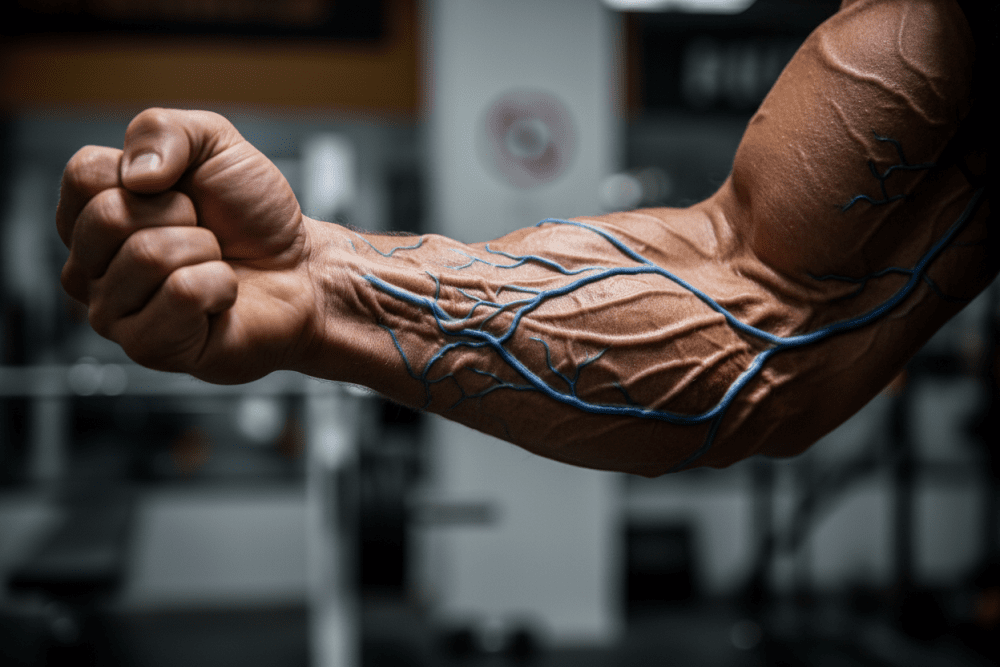
Frank McGrath has some of the most vascular and conditioned forearms in bodybuilding history. While his forearms measure slightly under 20 inches, what McGrath lacks in raw size, he makes up for in definition and vascularity.
McGrath trained his forearms daily before beginning competitive bodybuilding. His philosophy? If you want growth, train frequently. Those road-map veins didn't appear by accident.
The Bodybuilding Giants with Massive Forearms
Biggest forearms in bodybuilding history includes some legendary names you need to know.
Lee Priest: The Freak (18 inches)
Lee Priest had some of the freakiest forearms in bodybuilding, measuring 18 inches at their peak. What made Priest's forearms special wasn't just size but the density, thickness, and separation that made them look absolutely inhuman on stage.
Sergio Oliva: The Myth (Estimated 17-18 inches)
Sergio Oliva invented the "victory" pose, requiring extended arms straight overhead with fists goosenecked, which showcased his ginormous forearms and biceps. The Myth set the standard for forearm development in his era and made them a focal point rather than an afterthought.
Phil Heath: The Gift (17 inches)
Phil Heath achieved 17-inch forearms paired with 23-inch biceps, contributing to the symmetry that earned him seven Mr. Olympia titles. Heath proved that balanced development wins championships.
Ronnie Coleman: The King (Estimated 17+ inches)
Eight-time Mr. Olympia Ronnie Coleman had peak biceps measuring 22 inches, and his forearms were proportionally massive to match. Everything about Ronnie was big, and his forearms were no exception.
What Makes Forearms Grow to Extreme Sizes?
You're probably wondering: can I build massive forearms like these guys?
The honest answer: probably not to THAT extreme. But you can absolutely build impressive forearms. Here's what separates normal forearm development from the freaks:
Genetics Play a Huge Role
The size of forearms is largely determined by genetics, with forearms and calves being among the most difficult muscle groups to develop. Some people can build huge forearms with minimal effort, while others train for years with modest results.
Jeff Dabe is the perfect example. Born with naturally massive hands and forearms, his genetics gave him an unfair advantage that no amount of training could replicate.
Wrist Size Matters
People with bigger hands and wrists have an advantage in armwrestling due to leverage, not just strength. A thicker wrist provides more surface area for muscle attachment and creates a structural foundation for forearm size.
Levan's 11-inch wrist? That's the foundation his massive forearms are built on.
By the way, if you have smal wrist, and you are concerned about it, give this a read.
Training Volume and Frequency
Frank McGrath didn't get those veiny forearms by accident. He trained his forearms every day in his home gym before competitive bodybuilding. High-frequency training stimulates growth in stubborn muscle groups like forearms.
Sport-Specific Development
Notice how many of these guys are armwrestlers? That's not a coincidence. Armwrestling demands extreme forearm strength, endurance, and size. Levan uses extremely heavy dumbbells and trains at multiple angles, including 134kg bicep curls and 84kg bicep curls for 10 reps one-handed.
The sport literally forces your forearms to adapt or fail.
How Big Are "Big" Forearms? (Real Talk)
Let's set some realistic expectations here.
Even among big guys, 13-inch forearms are unusual and typically end in wrists measuring 7.25 to 7.5 inches around.
Here's the scale:
- 15-16 inches = Average for lifters
- 17-18 inches = Muscular, impressive arms
- 19-20 inches = Big, head-turning forearms
- 21+ inches = Elite, freakish development
Most natural lifters cap out around 15-17 inches. Getting to 18+ requires either elite genetics, performance enhancement, or both. The 20+ inch club? That's reserved for genetic freaks and professional athletes.
The Science Behind Forearm Size
Your forearms aren't just one muscle. They're a complex system of muscles, tendons, and ligaments working together.
The major players:
- Flexors (underside of forearm) = Grip closing strength
- Extensors (top of forearm) = Finger and wrist extension
- Brachioradialis = The thick muscle that runs along the top, adding visual mass
The brachioradialis begins on the upper arm and inserts at the thumb side of the forearm but doesn't cross the wrist joint. This muscle is KEY for forearm width. Most people obsess over wrist curls when they should be hammering their brachioradialis.
Want Similar MASSIVE Forearms?
Look, I'm not going to lie to you and say you can build 20-inch forearms naturally.
Unless you're genetically blessed like Jeff Dabe or willing to dedicate your life to armwrestling like Levan, it's not happening.
BUT here's what you CAN do: build the best forearms YOUR genetics allow.
The Gripzilla Approach to Maximum Forearm Development
At Gripzilla, we've spent years studying what actually works for forearm and grip strength development. No BS. No shortcuts. Just proven methods that deliver results.
The Three Pillars of Forearm Growth
1. Progressive Overload
Your forearms respond to increasing resistance over time. Each forearm exercise should be done to failure, meaning your set is complete once you can no longer lift with good form. This principle applies whether you're using grip strengtheners, doing wrist curls, or performing farmer's walks.
2. Balanced Development
When people say they want huge forearms, they make the mistake of focusing on the wrong muscles. You need to train ALL aspects of forearm function:
- Flexion (gripping/squeezing)
- Extension (opening fingers)
- Pronation/supination (rotating forearm)
- Wrist stability
This is where tools like the Gripzilla Dynamo shine.
 The Dynamo's unique wringing motion activates all 20 forearm muscles simultaneously, working both flexors AND extensors in one movement.
It's adjustable resistance means you can customize the difficulty to match your current strength level while preventing imbalances that lead to injury.
3. Frequency and Consistency
The Gripzilla Tornado is perfect for daily training because it works through natural, multi-dimensional movements that strengthen muscles, tendons, and joints without beating them up.
Athletes use it as part of their warm-up routine, during rest days, or even while doing cardio. Its dynamic resistance system activates over 30 muscles with every twist, making it one of the most time-efficient forearm builders available.
The Complete Forearm Transformation System
Our grip training collection includes everything you need for complete forearm development:
For Crushing Grip Strength:
 Six grippers from 50-300lbs with progressive resistance. This is your foundation for building maximum crushing power. Comes with a carrying bag and foam handle covers.
For Balanced Forearm Development:
 Activates all 20 forearm muscles through unique wringing movements. Adjustable resistance lets you customize difficulty. Perfect for rehabilitation and prehab work.
 Targets over 30 muscles with dynamic, multi-angled training. Works wrists, forearms, and builds grip endurance through natural motion patterns.
For Rotational Strength:
- Gripzilla Spinster - Develops pronation and supination strength that armwrestlers depend on. Adjustable weight system allows progressive overload.
For Finger and Extension Work:
 Progressive resistance from 40-120lbs. Perfect for finger strengthening and extension work that balances crushing strength.
For Armwrestling Specific Training:
 Complete setup for solo armwrestling practice. Includes specialized tools for wrist cupping, side pressure, and sport-specific movements.
No genetic lottery required. Just consistent effort with the right tools.
How Long Does It Take to Build Impressive Forearms?
Let's set realistic expectations.
People with greater grip strength show better immune strength, cognitive functioning, higher life satisfaction, greater subjective well-being, and reduced depression and anxiety symptoms.
The benefits extend far beyond aesthetics.
Timeline for forearm growth:
- Weeks 1-4: Strength gains, better endurance, improved coordination
- Weeks 5-8: Visible muscle growth, increased vascularity
- Weeks 9-12: Noticeably bigger forearms, people start asking about your training
- 6+ months: Substantial transformation, balanced development
The key? Consistency beats intensity. Train smart, use progressive overload, and give your body time to adapt.
Common Mistakes That Kill Forearm Growth
Mistake #1: Only Training Flexors
Most people only do squeezing exercises. Bad idea. You need to train extensors too or risk imbalances and injury.
Mistake #2: Neglecting the Brachioradialis
The brachioradialis is responsible for most forearm width. If you're only doing wrist curls, you're missing the boat.
Mistake #3: Training Too Heavy, Too Soon
Forearms have lots of small muscles, tendons, and ligaments. Respect them. Start lighter, progress gradually, avoid tendonitis.
Mistake #4: Inconsistent Training
Training forearms once every two weeks won't cut it. A few forearm exercises each week can sufficiently enhance strength. Make it a regular part of your routine.
Mistake #5: Ignoring Recovery
Tendons need recovery time. If your forearms are constantly sore or painful (not just fatigued), back off and let them heal.
FAQs
Who has the biggest forearms in the world right now?
Levan Saginashvili currently holds the title with 20.5-inch forearms, though Jeff Dabe also claims 20-inch measurements. Both have legitimate claims to the world's biggest forearms.
Can you build 20-inch forearms naturally?
For 99.9% of people, no. Twenty-inch forearms require exceptional genetics, possibly enhanced training, or both. However, building impressive 16-18 inch forearms is absolutely achievable naturally with dedicated training.
What's the average forearm size for men?
The average forearm size for adult men is approximately 11-12 inches. Lifters typically have 13-15 inch forearms, while 17+ inches is considered exceptional.
Do armwrestlers have the biggest forearms?
Generally, yes. Armwrestling demands extreme forearm development, and many of the world's biggest forearms belong to professional armwrestlers like Levan Saginashvili and Devon Larratt.
How often should I train forearms to make them bigger?
Train forearms 2-4 times per week for optimal growth. Unlike larger muscle groups, forearms can handle higher training frequency due to their role in daily activities and their predominantly slow-twitch muscle fiber composition.
Are bigger forearms stronger forearms?
Usually, but not always. Size indicates muscle mass, but strength also depends on neural efficiency, tendon strength, and technique. That's why trained armwrestlers can beat bigger opponents who lack sport-specific skills.
What's more important: genetics or training for forearm size?
Genetics set your ceiling, but training determines if you reach it. While genetic outliers like Jeff Dabe exist, most people can add 2-3 inches to their forearms through consistent, intelligent training over years.
Why are my forearms not growing despite training?
Common reasons include insufficient volume, lack of progressive overload, only training flexors (ignoring extensors), poor exercise selection, or inadequate recovery. Evaluate your program and make adjustments.
Do you need heavy weights to build big forearms?
Not necessarily. High-rep, moderate-weight training works excellently for forearms. The key is training to failure with good form and progressively increasing difficulty over time.
The Bottom Line on Building Massive Forearms
The biggest forearms in the world belong to genetic anomalies and elite athletes who've dedicated their lives to grip sports.
Levan Saginashvili, Jeff Dabe, Gunnar Røsb, and Frank McGrath represent the absolute peak of forearm development.
Can you match them? Probably not.
Can you build YOUR best forearms? Absolutely.
The path forward is simple:
- Train consistently (2-4 times per week)
- Use progressive overload
- Balance flexors, extensors, and brachioradialis work
- Incorporate heavy compound lifts
- Use specialized grip training tools
Most importantly, use the right equipment.
Training forearms with inadequate tools is like trying to build a house with toy hammers. It's frustrating, inefficient, and limits your results.
Ready to Build Unstoppable Forearm Strength?
Stop admiring other people's forearms and start building your own.
At Gripzilla, we've helped thousands of athletes, lifters, and everyday people transform their grip strength and forearm development.
Our equipment isn't just another fitness gadget. It's a comprehensive system designed to deliver real results.
Shop the complete Gripzilla forearm training collection and start building the grip strength you deserve.
Whether you want:
- Forearms that turn heads
- Grip that never fails during deadlifts
- Hand strength for your sport
- Functional fitness that improves daily life
Gripzilla has the tools, expertise, and community to get you there.
Don't settle for average forearms. Build legendary grip strength.