
Most forearm equipment guides throw every tool at you and call it a day. Wrist roller, hand gripper, resistance band, barbell.
Fine advice, but it tells you nothing about which one solves your actual problem.
Forearm workout equipment works best when you match the tool to the training goal. The wrong tool for your goal wastes time. The right one moves the needle fast.
Here is what each major piece of forearm training equipment actually does, who it is for, and why it earns a place in a serious routine.
Why Forearm Training Equipment Matters
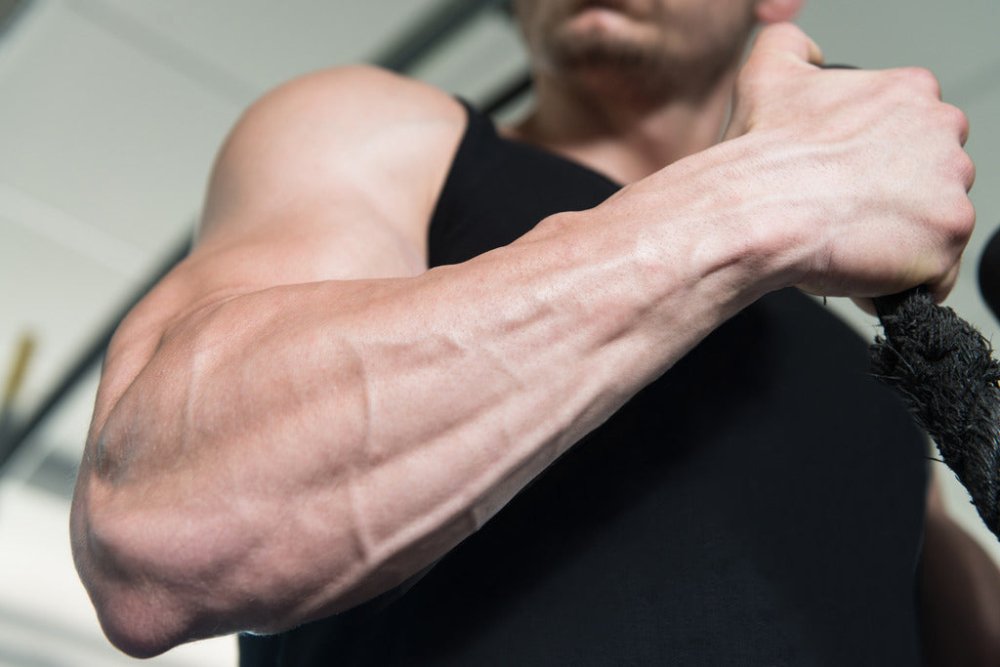
Your forearms contain over 20 muscles responsible for wrist flexion, extension, rotation, and grip. Most gym programmes hit them indirectly through pulling movements, and that is fine up to a point.
After that point, direct forearm work with dedicated equipment is what drives real size and strength.
If your grip gives out before your back during deadlifts, your forearms are the weak link. If your arms look underdeveloped from the front, it is almost always the forearms.
Most forearm plateaus come from training the same movement pattern with the same resistance rather than rotating tools and stimulus.
The equipment below covers every angle your forearms need.
Best Forearm Workout Equipment
Here is a list of 7 forearm workout tools you can use to build size:
1. Gripzilla Tornado
 Best for: Full forearm development, 3D movement training, athletes and advanced lifters.
The Tornado is the most versatile piece of forearm equipment in this list.
Where most tools work in a single plane, the Tornado loads the forearm through three axes simultaneously, flexion, extension, rotation, ulnar and radial deviation, in one continuous movement.
That matters because forearm muscles do not work in isolation. They work in combination, and single-plane tools like a wrist roller or gripper only train part of that. The Tornado covers the whole system.
It is also the most honest option for forearm size. The research on forearm growth consistently points to multi-angle loading as the primary driver of thickness, not just wrist curls. For anyone whose forearms have stalled, this is usually the missing piece.
Who it is for: lifters chasing forearm size, arm wrestlers, climbers, anyone who has hit a plateau with simpler tools.
2. Gripzilla Dynamo

Best for: Wrist and forearm endurance, rotational strength, support grip.
The Dynamo is a wrist roller done properly.
The wringing and rolling motion it uses keeps the forearm under continuous tension through the full range of movement rather than the brief loading that most tools provide.
Both flexors and extensors work through the same set, which means you are building balance across the forearm rather than just the crushing side.
The endurance demand is what sets it apart. Hold the Dynamo under load for a full set and you will feel the kind of deep forearm fatigue that carries directly into dead hangs, heavy rows, farmer carries, and any lift where support grip is the limiting factor.
For the full breakdown of exercises you can run with it, the forearm strength exercise guide covers the Dynamo in detail alongside every other forearm movement worth doing.
Who it is for: anyone building support and endurance grip, BJJ and MMA athletes, climbers, and lifters who want forearms that last through a full session.
3. Hand Grippers
 Best for: Crush grip strength, forearm flexor density, progressive overload.
Hand grippers are the most direct tool for crush grip and the easiest to use consistently. Squeeze the handles shut against resistance, let them open slowly, repeat.
That movement hits the forearm flexors hard and, over time, adds real density to the lower forearm where thickness is most visible.
The key is progression. A single gripper at a fixed resistance will plateau in weeks. A graded set like the Ultimatum 6-piece kit, running from 50lb to 300lb, lets you keep adding load as your hands catch up.
That progressive demand is what drives long-term forearm growth from a gripper. For the full case on what grippers actually build, does a hand gripper build forearms covers the mechanism clearly.
Who it is for: beginners building their first real forearm base, intermediate lifters chasing crush grip, anyone who wants portable forearm training with zero setup.
4. Gripzilla Titan Balls

Best for: Pinch grip, finger strength, rotational hand control.
The Titan Balls are a different kind of forearm tool. Where grippers and rollers load the hand in a closing pattern, the Titan Balls work in an open, rotational pattern.
You hold them in the palm and rotate or flip them against their own weight and shifting centre of gravity, which forces the fingers, thumb, and hand stabilisers to work constantly to maintain control.
Pinch grip is the most neglected type of hand strength in most training programmes. It is also the type that shows up most in climbing, grappling, and any sport where you control an opponent or surface with your fingertips rather than a full fist. A few sets of Titan Ball rotations at the end of a forearm session fills a gap that no other tool here covers.
Who it is for: climbers, grapplers, arm wrestlers, and anyone training all four types of grip strength rather than just crush.
5. Gripzilla Wrist Cupping Handles
 Best for: Arm wrestlers, wrist pronation and supination strength.
The Wrist Cupping Handles are the most sport-specific tool in the lineup.
Arm wrestling is won and lost on pronation, the rotational force that drives the opponent's hand toward the pad. These handles allow you to train that exact movement pattern under load, which no standard forearm tool replicates.
Outside of arm wrestling, pronation and supination strength have real carryover to BJJ, combat sports, and any activity that requires twisting force through the wrist and forearm.
Who it is for: arm wrestlers first, grapplers second, and any athlete who needs rotational wrist strength that barbell work does not cover.
6. Gripzilla Cliff Hang Rings
 Best for: Support grip endurance, dead hang strength, climbing-specific finger and forearm training.
The Cliff Hang wooden rings take the dead hang, one of the most effective forearm and grip exercises in existence, and add a wooden grip surface that is harder to hold, more comfortable on the skin, and more similar to real climbing holds than a bare pull-up bar.
Dead hangs develop support grip, the ability to hold on under load for time, faster than almost any other exercise. They also decompress the spine and build the shoulder stability that arm wrestlers, climbers, and calisthenic athletes need.
The ten exercises for massive forearms guide covers why dead hangs consistently outperform wrist curls for overall forearm development.
Who it is for: climbers, calisthenics athletes, anyone building dead hang time and overall forearm endurance.
7. Liquid Chalk
 Best for: Grip maintenance under heavy load, preventing slip before muscle failure.
Liquid chalk is not a strength tool, but it belongs in this list because it directly affects how well every other tool on it works.
If your hands are sweating and slipping before your forearms have reached their limit, you are stopping short of real training stimulus. Chalk fixes that without the mess of loose powder.
It is particularly useful on high-rep gripper work, dead hangs, and heavy carries where the grip tends to give up to slippage rather than true muscular fatigue.
How to Choose the Right Forearm Workout Equipment?
The equipment you need depends on what your forearms are actually missing.
- Weak crush grip. Grippers and the Ultimatum kit.
- Weak support grip and endurance. Dynamo and Cliff Hang Rings.
- Weak pinch and finger strength. Titan Balls.
- Full forearm size and development. Tornado, which covers more angles than anything else here.
- Wrist imbalances or elbow pain. Spinster to balance extensors against flexors.
- Sport-specific arm wrestling strength. Wrist Cupping Handles.
Most people benefit from combining two or three of these rather than running just one.
A gripper set for crush strength, the Dynamo or Tornado for rotational and endurance work, and the Titan Balls for pinch grip covers every type of forearm and grip training in a compact, portable setup.
For the exercises to run with all of this equipment, the grip strength workouts guide covers structured routines that use multiple tools across a single session.
And if you want to see how elite athletes approach forearm training with dedicated equipment, the Sam Sulek forearm workout and the guides on biggest forearms in the world are worth reading alongside this.
Weak forearms are always the ceiling. Build them with the right tools and everything else follows.