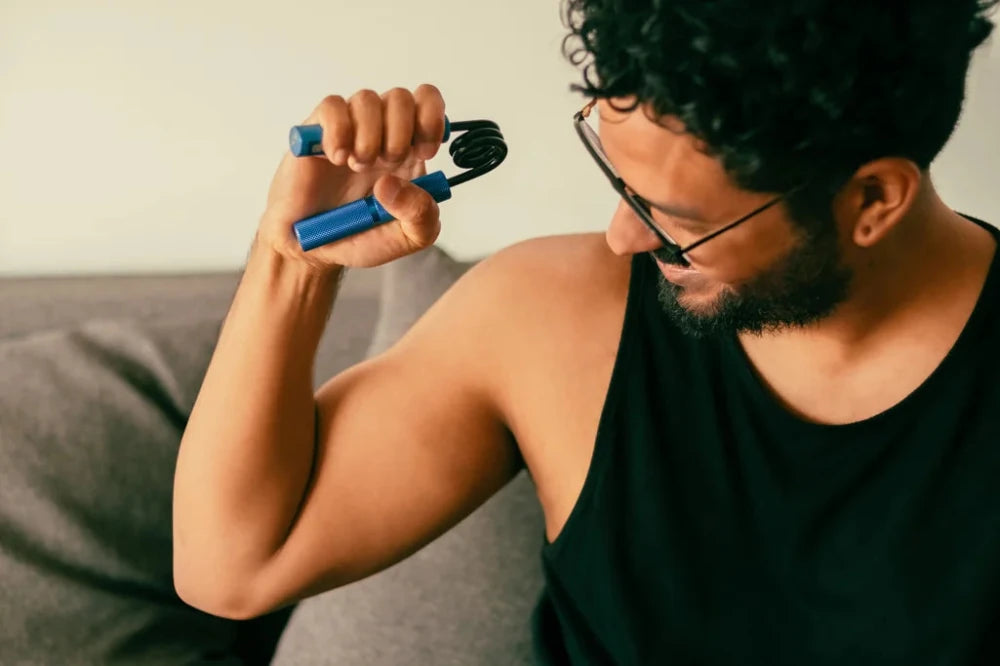

Walk into any sporting goods store and you will find a plastic hand gripper for five bucks.
Squeeze it a hundred times while watching TV and nothing happens. That is where most people's grip training starts and ends.
The problem is not the tool. It is the type.
Hand grippers come in several distinct designs, each built for a different job. Pick the right one and your forearms, wrists, and crushing strength climb fast. Pick the wrong one and you own a desk toy.
Here is every type worth knowing, what each one does best, and which resistance to actually start with.
What Hand Grippers Train
Grip strength splits into three categories:
- Crush grip: closing your hand hard against resistance. Handshakes, gripping a bar, crushing a can.
- Support grip: holding something heavy for time. Deadlifts, farmer's carries, pull-up hangs.
- Pinch grip: clamping between thumb and fingers. Plate pinches, opening jars, climbing holds.
Hand grippers primarily build crush grip, with strong carryover to support grip. That matters because crush strength is the foundation the other two lean on.
4 Main Types of Hand Grippers (And Who Each Is For)
 Every gripper on the market falls into one of four categories. Here is each one, ranked by how much strength it actually builds.
1. Torsion Spring Hand Grippers
The classic design, and still the best. Two knurled handles connected by a torsion spring, one calibrated resistance per gripper. You do not adjust it. You earn the next one.
Why Fixed Resistance Beats a Dial
A fixed spring forces honest effort. There is no dial to sneak down mid-set, no vague "level 4 of 10" that means nothing between brands. A 150 lb gripper is 150 lbs today, next month, and the day you finally close it clean.
That measurability is exactly what makes torsion spring grippers the standard among serious grip athletes.
How the Resistance Ladder Works
 Instead of one tool, you train up a ladder of levels. Here is the full range and who each is for:
- 50 lb: complete beginners, teens, rehab, warm-ups. Start here if you have never trained grip. The Gripzilla Baby 50 lb gripper covers this rung.
- 100 lb: the right starting point for most adult men and active women. Challenging, closable, room to grow. That is the Toddler 100 lb gripper.
- 150 lb: your next stop once you close the 100 for 10 to 15 clean reps. The Big Boy 150 lb gripper is where forearms start turning heads.
- 200 lb: a legitimate intermediate milestone. Most gym-goers never close the Punisher 200 lb gripper. Training toward it is a goal in itself.
- 250 lb: advanced territory. The Bone Crusher 250 lb gripper demands months of structured work above the 200.
- 300 lb: elite. Closing The Gripzilla 300 lb gripper puts your crush strength in rare company.
The Three-Gripper Method
Serious grip training uses three adjacent levels at once: one below your max for warm-ups and high-rep volume, your working gripper, and your goal gripper for low-rep attempts.
That is the logic behind the Gripzilla Ultimatum 6-piece kit, which covers the entire ladder in one box for less than buying levels one by one as you outgrow them.
2. Adjustable Hand Grippers
An adjustable hand gripper uses a dial or slider to change tension, usually from around 10 lbs to 130 lbs in a single unit.
They are compact, cheap, and fine for casual use, light rehab, or testing whether grip training interests you at all before committing.
But three real problems hold them back. The marked resistances are rarely accurate, so you never truly know what you are closing. The mechanism is the weak point, and dials loosen with hard training. And the ceiling sits around 130 to 150 lbs, which serious trainees pass within a year.
If you already know you want measurable strength, the fixed ladder is the straighter road.
3. Finger Grippers
A finger gripper has individual spring-loaded slots so each digit trains independently.
Who actually needs one: climbers, whose sport hangs on individual finger strength. Guitarists and pianists, whose fingers are their livelihood. And anyone rebuilding one lagging finger after injury.
For general grip and forearm goals, this is assistance work, not the main event. Your fingers work as a team in almost everything, so train them that way first.
4. Grip Rings and Extensor Bands
The forgotten category, and skipping it costs people elbows.
Every gripper above trains squeezing. Nothing trains opening. Extensor bands resist opening the hand, working the muscles on the back of the forearm that keep the whole system balanced.
Training crush without extension is like training biceps without triceps, and that imbalance is a classic route to elbow pain and stalled progress. A cheap band a few times a week fixes it.
Grip rings fill the other gap: light, silicone, portable resistance for high-rep volume anywhere.
What Resistance Level Hand Gripper Should You Start With?
![Gripzilla "TODDLER" Individual Gripper - 100LB [USA Only] - Gripzilla - The Best Grip and Forearm Strength Exercises, Arm Wrestling Tools, Hand Grippers to Improve Grip Strength](https://cdn.shopify.com/s/files/1/0272/2408/0419/products/gripzilla-toddler-individual-gripper-100lb-usa-only-117257.jpg?v=1671051145) The short answer for most adults: 100 lbs. Hard enough to build strength, closable enough to train with real form.
The short answer for most adults: 100 lbs. Hard enough to build strength, closable enough to train with real form.
Two mistakes to avoid. Starting too heavy, where you half-close the gripper with bad form and stall for months.
And staying too light, where endless easy reps build endurance but no strength. The gripper should feel hard by rep 8, not impossible at rep 1.
Move up a level when you can close your current gripper for 10 to 15 clean, full reps.
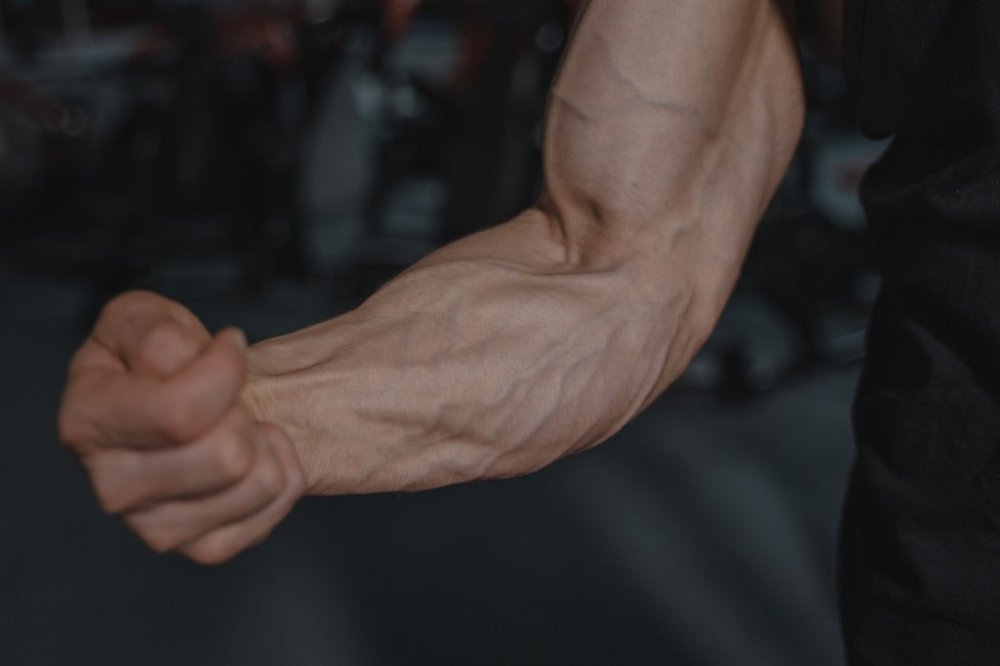
High-rep gripper work has a bonus most people discover by accident: it floods the forearm with blood, and the forearm is where veiny arms show up first.
Which Type of Hand Gripper Fits Your Goal
- New to grip training: Start with the 50 or 100 lb gripper, or grab the full kit and grow into it.
- Lifter with grip as the weak link: 100 lb now, ladder up. Your deadlift will notice.
- Arm wrestler: Grippers build your crush base; pair them with wrist and rotational work, which is where dedicated arm wrestling tools take over.
- Climber or musician: Finger gripper plus extensor bands.
- Desk worker with cranky wrists: Grip rings for volume, extensor band for balance, light gripper when ready.
FAQs
Do cheap plastic hand grippers work?
For a few weeks, maybe. Most are too light to drive strength gains and the plastic gives out fast. If it costs less than a burger, it trains like one.
Are adjustable hand grippers as good as fixed ones?
For casual use, sure. For measurable strength, fixed torsion spring grippers win on accuracy, durability, and ceiling.
How often should I train with hand grippers?
Two to four sessions a week. Grip muscles recover fast, but they also work in every pulling exercise you do, so more is not automatically better.
Can hand grippers build forearm size?
Yes, especially high-rep sets that pump blood into the forearm. Pair gripper work with wrist and reverse curls for complete development.